Weddings live in the details.
Not the over-the-top gestures or the oversized installs meant to dominate social feeds, but the thoughtful choices that quietly connect one moment to the next. The texture of paper between your fingers. The way colors repeat without shouting. The feeling guests get when everything feels intentional, even if they can’t quite explain why.
Design-led weddings work because they tell a story without narration. Every decision, from stationery to signage to table styling, adds another sentence. When those sentences belong to the same story, the entire celebration feels elevated.
Couples and planners are leaning into this idea more than ever. According toThe Knot’s 2025 Real Weddings Study, 82% of couples say the venue is the first vendor they book, largely because it shapes the visual direction of the day. Once that setting is chosen, the rest becomes a series of design responses.
This article explores how small design details create cohesive wedding aesthetics, why personalization and experience-driven planning matter, and how thoughtful choices leave a lasting impression long after the final song.
The Power of Cohesion
Cohesion doesn’t mean matching everything perfectly.
It means nothing feels random.
A cohesive wedding aesthetic relies on repetition, balance, and restraint. When guests move through the day, they subconsciously pick up on patterns. Colors echo. Materials repeat. Typography stays consistent. Those signals help the celebration feel polished without ever feeling stiff.
This matters because weddings are multi-part experiences. There’s a ceremony, cocktail hour, reception, and often a few moments in between. Design acts as the connective tissue.
Visual Continuity From Start to Finish
The first design interaction guests usually have isn’t the venue. It’s the invitation.
Paper choice, layout, color palette, and wording all hint at what’s coming. Couples who opt for custom wedding invitation designs often use them as a foundation, pulling fonts or motifs into menus, programs, and signage later in the day.
That repetition does two things:
● It sets expectations early
● It makes the event feel thoughtfully planned
And yes, people notice. Even if they don’t say it out loud.
Why Small Details Carry Big Weight
Design details work because they operate on a human scale.
Guests interact with them up close. They touch them. They read them. They linger on them while waiting for the next moment to begin. These are opportunities to reinforce the aesthetic story.
Stationery, Signage, and Wayfinding
Clear, attractive signage helps guests feel comfortable. It also contributes to the visual rhythm of the event.
Welcome signs, seating charts, and even directional pieces can reflect the same design language as the invitations. Materials matter here. Acrylic feels different than linen. Wood communicates something else entirely.
Outdoor celebrations often add another layer with yard signs for parking guidance, entrances, or weekend events. When these pieces align with the rest of the design, they feel like part of the experience rather than an afterthought.
Tablescapes That Tell a Story
Tables are where guests spend the most time. That makes them prime real estate for design-led storytelling.
Consider how these elements work together:
● Linens and textures
● Place cards and menus
● Flatware finishes
● Centerpieces and candle styles
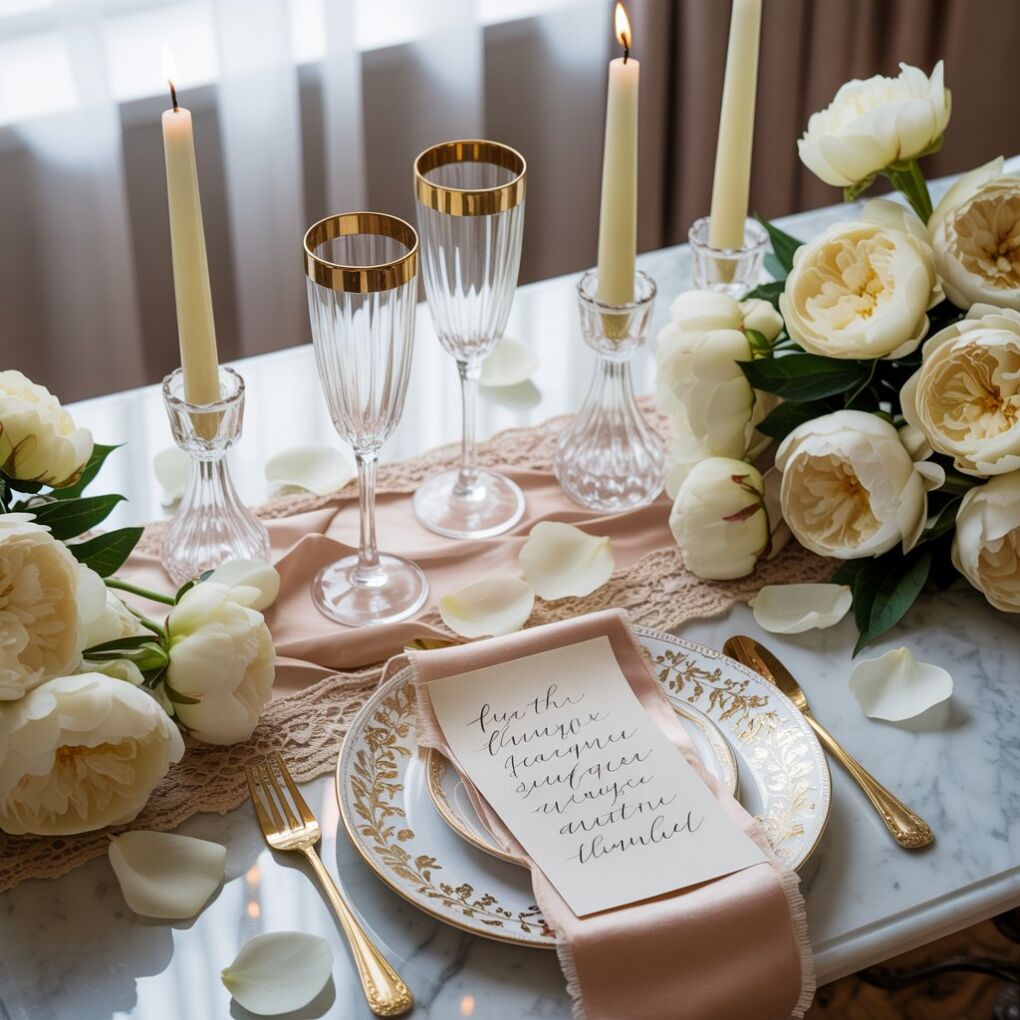
None of these need to be elaborate. They just need to relate to one another. A handwritten place card paired with minimalist florals sends a very different message than bold typography next to lush arrangements.
Personalization as a Design Choice
Personalization isn’t about excess.
It’s about relevance.
Couples today want weddings that feel like reflections of who they are, not replicas of what they’ve seen before. Design is often where that individuality shows up most clearly.
The Zola First Look Report for 2025 highlights measurable shifts toward themed décor and customized visual elements. While the full report details the percentages, the takeaway is clear: couples are prioritizing design decisions that feel personal and expressive.
Meaningful Motifs and Subtle References
Personal design details don’t need explanation cards.
A recurring olive branch motif might reference a family heritage. A specific shade of blue might echo a favorite travel memory. A monogram doesn’t have to dominate the room to feel special.
When planners help couples identify these touchpoints early, it becomes easier to weave them through the event without overdoing it.
Venue as the Visual Anchor
The venue sets the tone before anything else arrives.
That’s not opinion. It’s backed by data.
The Knot’s Real Weddings Study found that 82% of couples book their venue first because it heavily influences the overall style. Color choices follow closely behind, with green (60%), blue (50%), and pink (38%) leading among 2024 couples.
Designing With the Space, Not Against It
A ballroom calls for different decisions than a garden. A historic estate asks for restraint where a blank canvas venue invites experimentation.
Research published in Research in Hospitality Management studied 483 newlywed couples and found that décor and atmosphere significantly affect satisfaction levels. The setting isn’t just a backdrop. It’s part of how couples remember the day.
Good design responds to architecture, light, and scale. It doesn’t compete with them.
Experience-Driven Design Choices
Weddings aren’t static.
They move.
Guests walk, sit, stand, dance, and pause. Design that considers these movements feels intuitive and welcoming.
Moments That Invite Interaction
Experiential weddings focus on how people feel, not just how things look.
Examples include:
● Escort cards that double as keepsakes
● Interactive seating charts
● Custom bar menus with personal notes
These details encourage guests to engage rather than observe. They also create natural conversation starters.
The Global 2025 Wedding Report by The Knot Worldwide surveyed over 33,000 newlyweds across eight countries and found that décor and venue ambiance consistently rank high in planning priorities. Across cultures, people value how weddings make them feel.
Sustainability as an Aesthetic Decision
Sustainable choices influence design more than many realize.
The IOSR Journal of Business and Management reports that 54% of wedding participants agree or strongly agree with eco-friendly options. These preferences affect materials, florals, and even color palettes.
Thoughtful Materials and Reuse
Designers are finding creative ways to reduce waste without sacrificing style:
● Reusable signage
● Potted plants instead of cut florals
● Digital elements paired with tactile accents
Sustainability doesn’t announce itself. It blends in.
Design-Led Storytelling in Action
When design choices align, the story unfolds naturally.
Guests may not remember every song or dish, but they’ll remember the feeling. The sense that everything belonged together.
That’s the quiet power of detail-driven weddings.
Conclusion: Why Details Define the Experience
Design details don’t compete for attention.
They build trust.
When couples and planners focus on cohesion, personalization, and experience, weddings feel intentional from start to finish. Invitations set the tone. Venues anchor the aesthetic. Small choices reinforce the story.
Data supports this approach. From venue-first planning to color preferences and satisfaction studies, research consistently shows that atmosphere and design matter.
For couples dreaming of a celebration that feels elevated without feeling forced, the answer isn’t more.
It’s better.
Better choices. Better alignment. Better storytelling.
And it all starts with the details.