Remember flipping through MTV’s Total Request Live with a frosted lip gloss tube in hand, watching Aaliyah glide in oversized cargos while Britney Spears lip-synced in a schoolgirl outfit? Or scrolling through BET’s 106 & Park, mesmerized by how Mary J. Blige made fur coats and bootcut jeans look like a mood? That was the magic of 2000s Black girl fashion—a cultural reset where Black women didn’t just participate in trends; we created them. While mainstream media credits Paris Hilton’s chainmail dress as the blueprint for fast fashion, let’s set the record straight: two years earlier, LisaRaye McCoy wore a nearly identical look to the 2000 VMAs, micro bag and all (essence.com). Before Bella Hadid made oversized cargos “cool,” Aaliyah was already serving that look with effortless cool. And let’s not forget—Juicy Couture tracksuits? Baby Phat did it first.
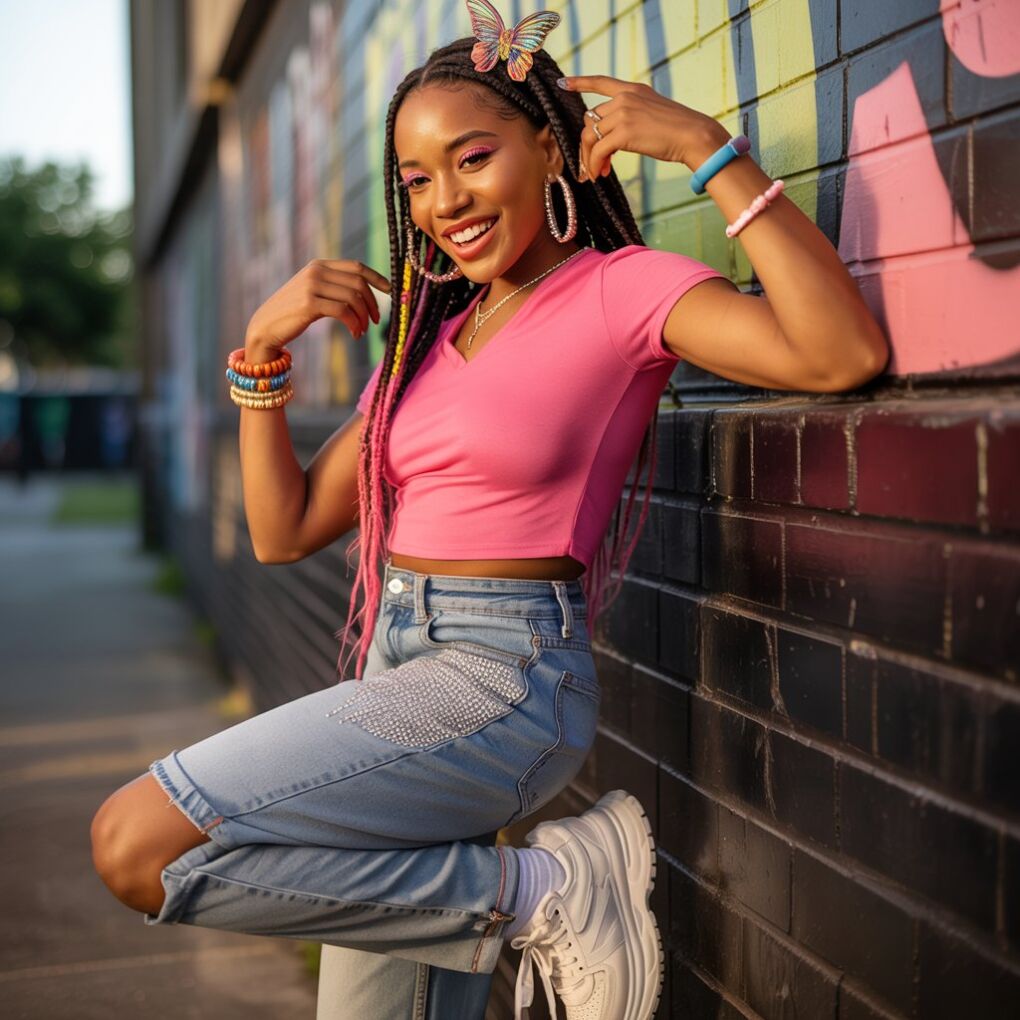
This era was revolutionary because it fused hip-hop swagger with R&B elegance, streetwear grit with high-fashion gloss. Black girls turned “ghetto fabulous” into a global aesthetic, proving that creativity born from marginalized communities always becomes high art—after being co-opted. From the “whale tail” thong peeking above low-rise jeans to bedazzled velour tracksuits, 2000s Black girl fashion celebrated curves, melanin-rich textures, and unapologetic individuality. And guess what? TikTok’s #Y2KBlackFashion hashtag (with 1.2M+ views) proves we’re still setting the standard. As Ohio designer Ron Blassingame famously said: “Ghetto is nothing but creativity that hasn’t been stolen, yet” (essence.com). So whether you’re rocking Apple Bottom jeans or micro-braids, remember: you’re wearing Black innovation. From baby tees to bedazzled everything, here’s how Black girls owned the 2000s—and why it’s back with a vengeance. ✨
The Rise of Y2K Black Girl Fashion Icons
The 2000s weren’t just about trends—they were about personalities. Black women turned fashion into storytelling, using clothing to declare their power, sensuality, and creativity. Let’s rewind to the queens who defined the era:
Aaliyah redefined tomboy chic with baggy Tommy Hilfiger cargos, cropped baby tees, and those iconic gradient sunglasses—a look that screamed “I’m cool without trying.” At the 2000 VMAs, she paired velour sweats with a baseball cap, proving athleisure could be elegant. Beyoncé, both solo and with Destiny’s Child, mastered the art of coordinated glamour: think matching sequined mini-dresses for “Bootylicious” or latex bodysuits in the “Say My Name” video that blended afrofuturism with Y2K edge (essence.com).
Rihanna’s early punk-rock phase (circa 2005’s Music of the Sun) featured studded belts, fishnet stockings, and neon hair—long before “bad gal” became her brand. Mary J. Blige owned the streets in bootcut jeans, fur-trimmed coats, and chunky Timberlands, embodying the “Queen of Hip-Hop Soul” with every step. Ciara brought futuristic flair with bedazzled low-rise jeans, hoop earrings the size of Saturn’s rings, and crop tops that highlighted her dancer’s physique in “1, 2 Step.” Lil’ Kim? She made barely-there outfits iconic—remember her purple pasty-covered VMAs look? And Ashanti turned velour tracksuits into red-carpet royalty, often rocking Baby Phat’s rhinestone-encrusted sets with matching micro bags.
These women didn’t just wear clothes—they curated movements. While white celebrities like Paris Hilton got credit for “inventing” trends, Black icons like LisaRaye McCoy and Aaliyah had already laid the blueprint (essence.com). They broke barriers by demanding space in high fashion (see: Kimora Lee Simmons’ Baby Phat empire) and redefining beauty standards for curvier bodies. Today, their legacy lives on through artists like Ice Spice and GloRilla, who remix Y2K aesthetics with Gen-Z authenticity (okayplayer.com).
🔥 Top 5 Outfit Recreations with Modern Twists
- Aaliyah’s Cargo Pants + Crop Top: Swap velour for sustainable linen cargos; pair with a cropped hoodie instead of a tee.
- Beyoncé’s “Bootylicious” Sequins: Try a single metallic mini skirt with a neutral bodysuit for daytime chic.
- Mary J. Blige’s Fur + Jeans: Rock faux-fur vests with wide-leg jeans and chunky loafers (no Timberlands required).
- Ciara’s Bedazzled Low-Rise: Opt for mid-rise jeans with subtle rhinestone pockets—comfort meets nostalgia.
- Ashanti’s Velour Tracksuit: Go monochrome with matching sets from brands like ASOS in eco-friendly fabrics.
Must-Have Trends in 2000s Black Girl Fashion
What made 2000s Black girl fashion so magnetic? It wasn’t just about what we wore—it was how we wore it. Black women transformed everyday items into statements of pride, blending hip-hop grit with R&B glamour. Let’s break down the essentials:
Baby Tees and Crop Tops
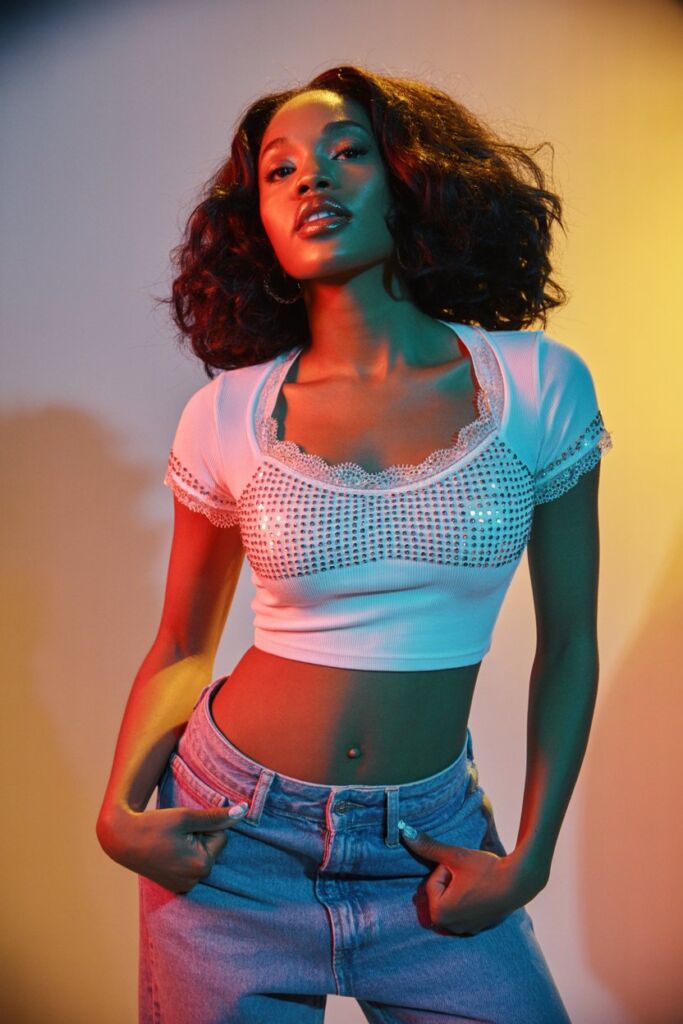
These weren’t just shirts—they were confidence. Paired with low-rise jeans (more on that soon), baby tees highlighted midriffs while celebrating natural curves. Black celebrities like Ashanti and Mya elevated them with bedazzled logos or lace trim, ensuring even basic tees felt luxurious. Pro tip: Today, style a cropped tee with high-waisted trousers for a polished retro vibe.
Juicy Couture Velour Tracksuits
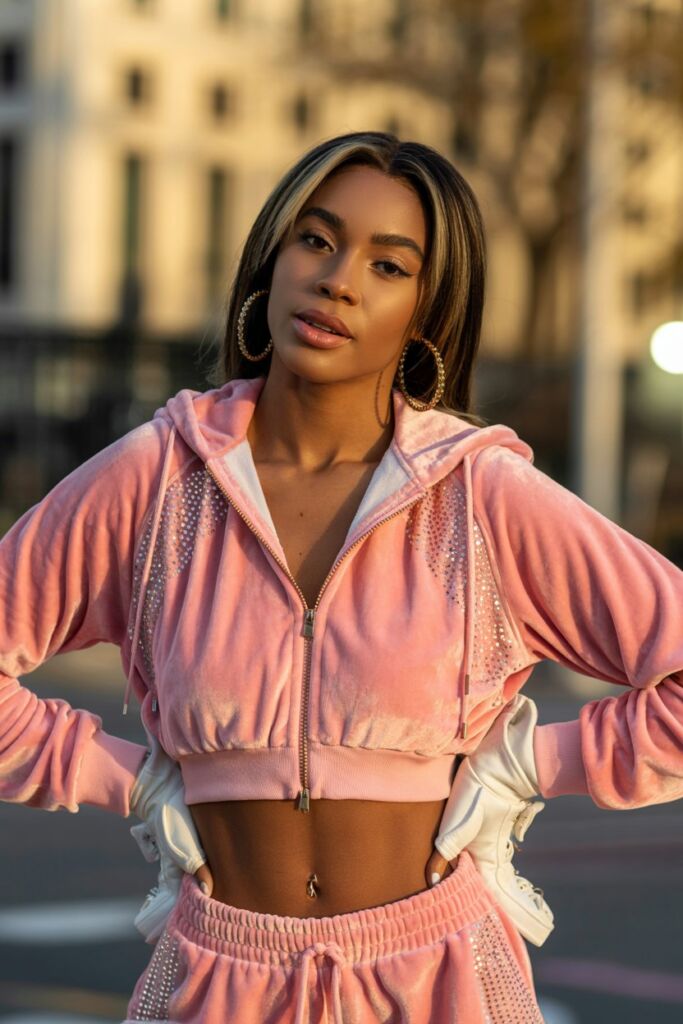
Let’s be real: Juicy was the uniform. But before it became a household name, Kimora Lee Simmons’ Baby Phat empire pioneered plush, logo-heavy sets that felt like luxury pajamas (parlemag.com). Beyoncé rocked them backstage; Ashanti wore them to award shows. The secret? Monochromatic sets with rhinestone logos that screamed “I’m worth it.”
Bedazzled Low-Rise Jeans and Belts
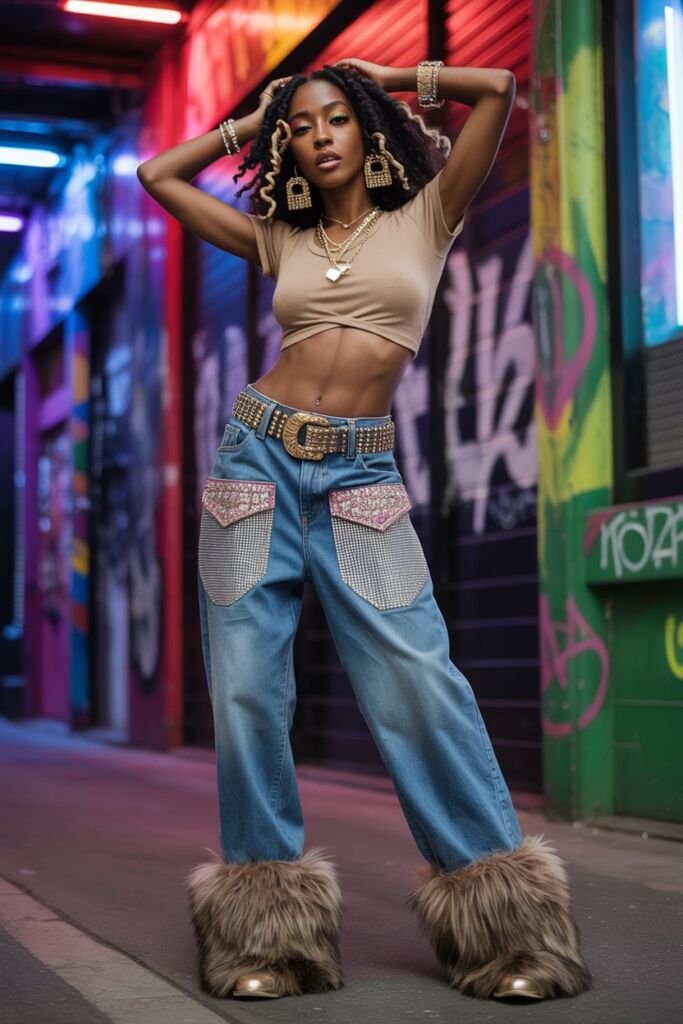
Low-rise jeans were everything—engineered by brands like Apple Bottoms to celebrate curvier silhouettes (herfashionforever.com). But Black girls took it further: bedazzled pockets, fur-lined hems, and belts so chunky they doubled as waist trainers. Ciara’s “1, 2 Step” video? A masterclass in how to make low-rise work.
Hoop Earrings, Bamboo, and Door-Knockers
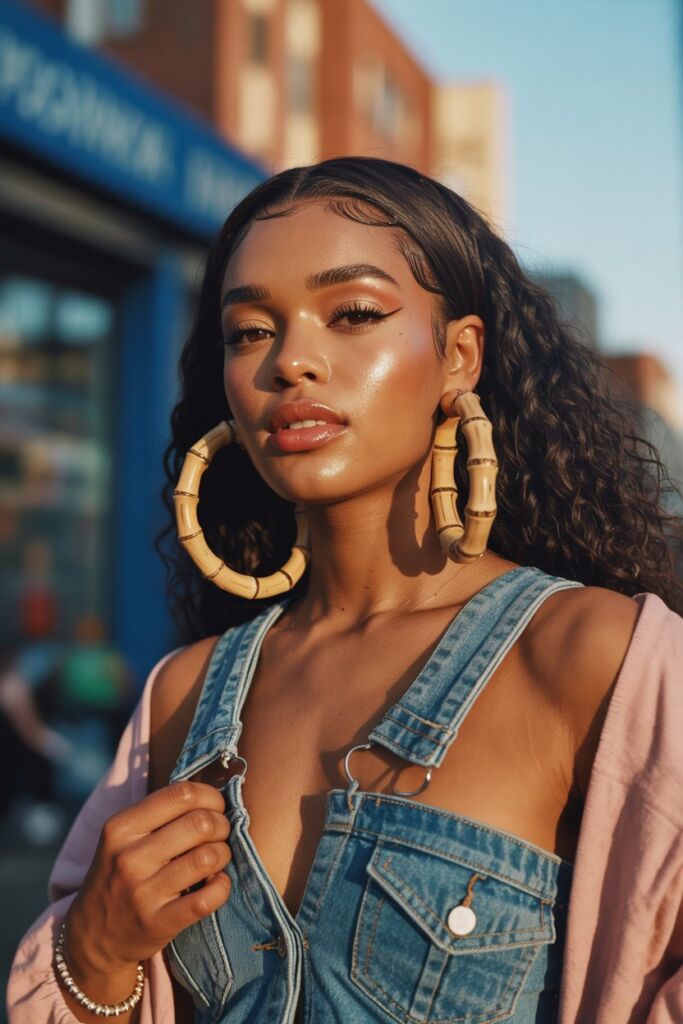
From $5 bamboo hoops to diamond-encrusted door-knockers, earrings were non-negotiable. Black girls wore them big, bold, and everywhere—whether paired with micro braids or sleek bobs. Lauren London’s “New New” character in ATL cemented oversized hoops as a cultural staple (essence.com).
Fur-Trimmed Everything
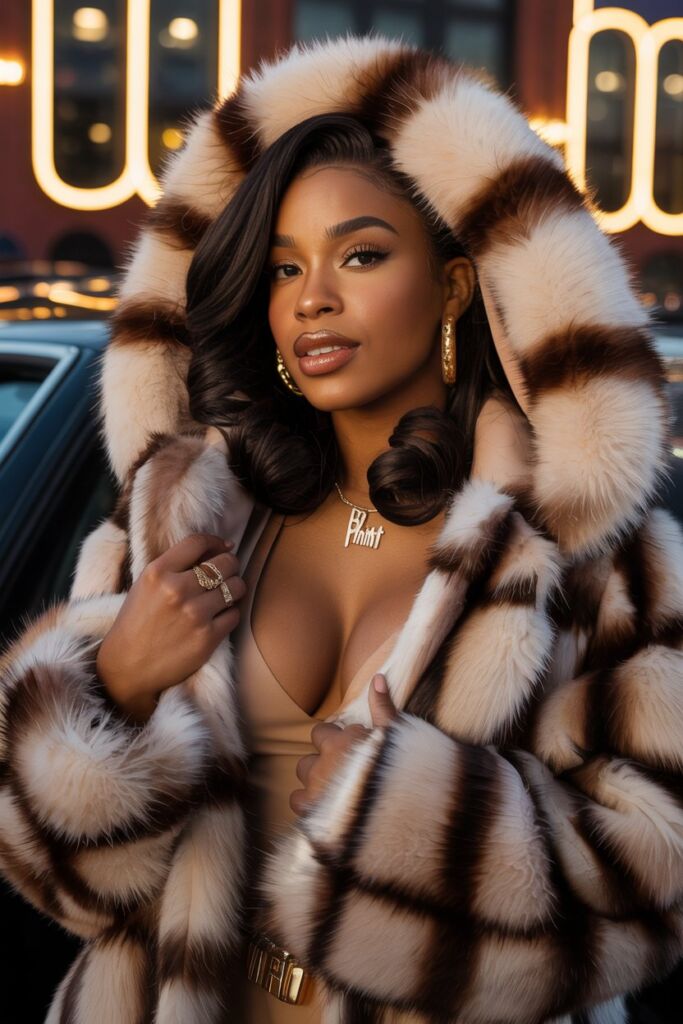
Mary J. Blige didn’t just wear fur—she commanded it. Coats, hoods, even purse trims: fur was the ultimate “I’m rich” flex. Black designers like FUBU and Baby Phat made it accessible, proving luxury wasn’t just for white runways.
Timberlands with Skirts/Dresses
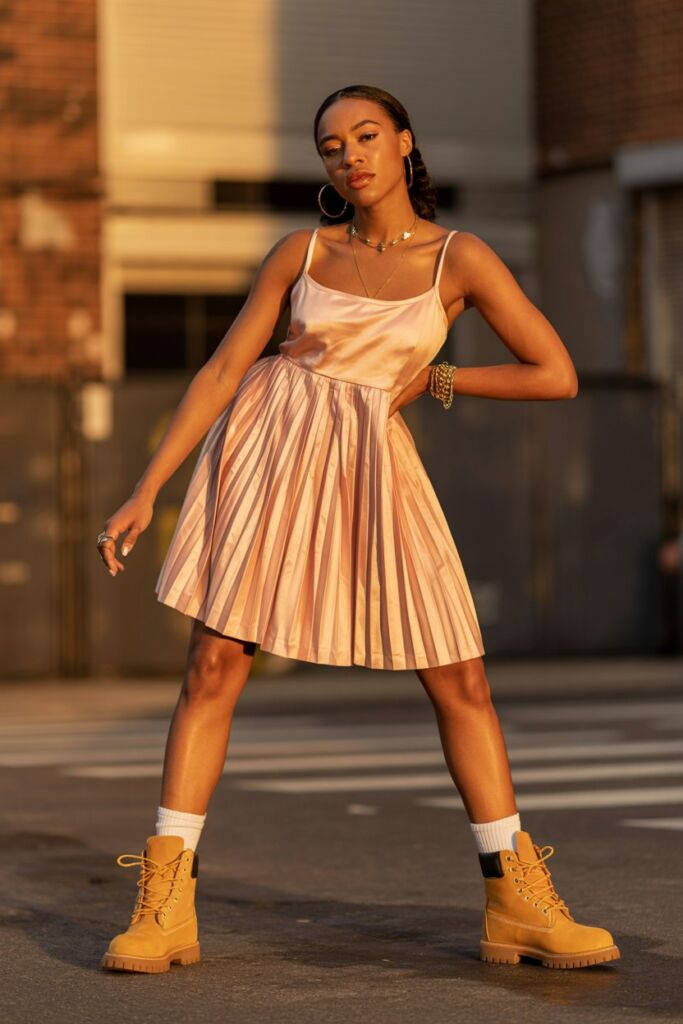
Who said combat boots and mini skirts don’t mix? Black girls rocked Timberlands with baby-doll dresses or schoolgirl skirts, blending femininity with urban edge. It was the “ghetto fabulous” aesthetic in action—raw, real, and rebellious.
Baby Phat/Baby Doll Dresses
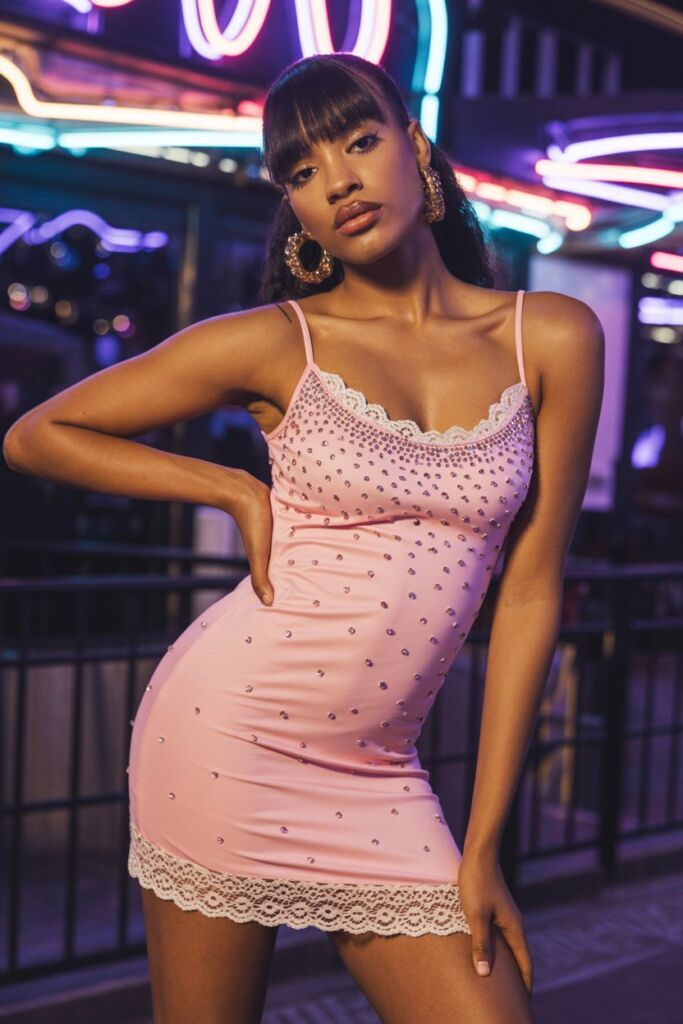
Kimora Lee Simmons’ Baby Phat line dominated with baby-doll dresses featuring lace trim, rhinestones, and figure-hugging cuts. They were playful yet provocative, perfect for club nights or casual hangs.
| Trend | 2000s Example | 2024 Revival |
|---|---|---|
| Velour Tracksuits | Ashanti in Baby Phat rhinestone sets | ASOS’ monochrome velour sets |
| Low-Rise Jeans | Ciara’s bedazzled Apple Bottoms | Wide-leg low-rise from Sephora’s collab |
| Hoop Earrings | Door-knockers with micro braids | Gold hoops with minimalist styling |
| Fur Trim | Mary J. Blige’s winter coats | Faux-fur vests from thrift stores |
Accessories and Hair That Defined the Era
If clothes were the canvas, accessories and hair were the masterpiece. 2000s Black girl fashion wasn’t complete without these showstoppers:
Oversized hoop earrings weren’t just jewelry—they were identity. Whether bamboo, gold, or encrusted with diamonds, they framed faces like halos. Grillz? A status symbol turned mainstream thanks to artists like Lil’ Kim (parlemag.com). While popularized in the 2000s, grillz trace back to 1980s hip-hop but became unisex staples by the Y2K era. Long acrylic nails—painted in French tips, neon, or bedazzled—were the ultimate “I’m done” flex. And baby hairs? Styled to perfection with edge-control gel, they turned simple weaves into art installations. Braids, from Bo Derek-inspired cornrows to micro braids with colorful beads, celebrated Black hair’s versatility.
“Long before Carrie Bradshaw called monogram necklaces ‘ghetto gold,’ Black girls were rocking personalized hoops and nameplate necklaces as acts of self-love.” — [essence.com](https://www.essence.com/fashion/2000s-fashion-trends-made-popular-by-black-culture/)
5 Ways to Rock 2000s Accessories Today
- Hoop Earrings: Try gold hoops with a sleek bun for instant throwback vibes (check out Amazon’s budget-friendly sets).
- Grillz: Opt for subtle tooth jewels instead of full grills—perfect for festivals!
- Acrylic Nails: Go for short, almond-shaped nails with chrome tips (salon hack: use Essie’s “Bikini So Teeny”).
- Baby Hairs: Use edge-control gel to create swooped designs—YouTube tutorials make it easy!
- Nameplate Necklaces: Personalize a dainty chain with your initial (Etsy has handmade options under $20).
Cultural Impact and Why It’s Reviving Now
The 2000s Black girl fashion movement wasn’t accidental—it was a cultural revolution. BET’s 106 & Park and MTV’s TRL amplified Black style, turning video vixens into household names. Designers like Kimora Lee Simmons (Baby Phat) and Daymond John (FUBU) built empires that centered Black aesthetics, proving streetwear could be high fashion. This era also championed body positivity: curvy icons like Lil’ Kim and Trina celebrated natural shapes long before “body positivity” became a buzzword.
Fast-forward to 2024, and TikTok’s #Y2KBlackFashion hashtag is exploding. Why now? Gen Z craves authenticity, and Black creators are reclaiming credit for trends once erased from mainstream narratives (parlemag.com). The resurgence isn’t just nostalgia—it’s a demand for inclusive fashion history. Platforms like Depop and Etsy make vintage Baby Phat velour tracksuits accessible, while brands like ASOS collaborate with Black designers to honor the era’s legacy.
“Trends that were considered controversial twenty years ago are now hot commodities.” — essence.com
Shopping vintage is key to honoring this history ethically. Hit up thrift stores for bootcut jeans or scour eBay for Baby Phat belts. Remember: every piece you wear carries a story of Black innovation. As the saying goes, “What’s old is borrowed, but what’s Black is always gold.”
Conclusion
The 2000s Black girl fashion era was more than trends—it was a declaration of self-love, creativity, and resilience. From Aaliyah’s gradient sunglasses to Mary J. Blige’s fur-trimmed coats, Black women turned “ghetto fabulous” into global glamour. Today, as Gen Z revives Y2K aesthetics, we must credit the pioneers who made it iconic. So grab those low-rise jeans (or their modern mid-rise cousins), dust off your hoop earrings, and remember: every time you slay in velour, you’re honoring a legacy. Which 2000s trend are you reviving? Drop your fave in the comments or tag us on IG @RetroStyleSquad—we’re ready to see you serve! 🔥