Picture this: that unworn Zara blouse you grabbed during last season’s Black Friday sale is gathering dust in your closet, while your best friend has a barely-touched Levi’s jacket she’s been meaning to get rid of for months. Now imagine turning that swap into a full-blown party—wine in hand, good music playing, and everyone walking home with a fresh wardrobe haul that cost them exactly nothing.
That’s the magic of a clothing swap, and it’s one of the smartest, most sustainable wardrobe moves you can make in 2026.
Americans discard an estimated 81 pounds of clothing per person every year, according to EPA data—most of it ending up in landfills rather than on someone else’s back. Fast fashion has made it easier than ever to buy, but harder than ever to feel good about what we’re buying. Resale apps like Poshmark and Depop promise a solution, but between shipping fees, platform cuts, and the hassle of packaging, it can feel like more work than it’s worth.
A clothing swap with friends cuts through all of that. It’s a sustainable fashion swap that costs nothing to attend, yields real wardrobe wins (the average swap nets participants over $100 worth of “new-to-you” clothes), and doubles as a genuinely great time. It’s community-building, zero-waste styling, and a wardrobe refresh all rolled into one Sunday afternoon.
Ready to turn your closet clutter into someone else’s treasure—and vice versa? Here’s everything you need to host a clothing swap event your friends will be talking about for seasons to come.
Why Host a Clothing Swap Event?
Before we get into the how, let’s talk about the why—because once you see the full picture, you’ll wonder why you haven’t been doing this every season.
Eco-Friendly Impact
The fashion industry is one of the most polluting on the planet, responsible for roughly 10% of annual global carbon emissions. When you host an eco-friendly clothing exchange, you’re directly reducing demand for new production and keeping wearable pieces out of the waste stream. In 2026, zero-waste styling isn’t a niche movement anymore—it’s a mainstream value, especially among women in cities like New York, Los Angeles, Chicago, and Seattle who are increasingly conscious of their consumption habits.
A single clothing swap among 10 friends can divert dozens of garments from landfills. Multiply that across a community, and the impact is real.
Budget Wins
Let’s be honest: even thrift stores aren’t the steal they used to be. Prices at Goodwill, ThredUp, and local consignment shops have crept up significantly over the past few years. And resale apps, while convenient, take a cut of every sale and charge buyers shipping on top.
A clothing swap costs you nothing except the items you bring—and those are pieces you were already planning to get rid of. Compare that to the alternatives:
| Option | Avg. Cost per Outfit | Sustainability Score |
|---|---|---|
| New Retail | $50+ | Low |
| Thrifting | $15–30 | Medium |
| Clothing Swap | $0 | High |
The math is pretty undeniable.
Social Fun
There’s something genuinely joyful about swap party hosting. It turns a mundane chore—cleaning out your closet—into a social event. You get to see your friends try things on, offer styling opinions, discover that your college roommate has the vintage finds you’ve been hunting on Etsy for months, and go home feeling like you just had a shopping spree without spending a dime. Add some charcuterie and a playlist, and you’ve got a full afternoon sorted.
Step-by-Step Guide to Planning Your Swap
Step 1: Pick Your Squad
The sweet spot for a clothing swap is 6 to 12 people. Any fewer and the selection feels thin; any more and it gets chaotic fast.
Think about diversity—not just of styles, but of sizes. The more size range you have in the room, the more everyone has to choose from. This isn’t the time to invite only your closest circle if they all wear the same size as you. Cast a slightly wider net: coworkers, neighbors, acquaintances from your yoga class. Send invites through GroupMe, Evite, or a simple Instagram DM two to three weeks out. Specify early on that this is a clothing swap event, not just a hangout, so people have time to prep their haul. A quick note about size ranges in the invite helps guests curate more thoughtfully.
Step 2: Set Fashion Swap Rules
Clear fashion swap rules are what separates a fun, functional swap from a chaotic pile of rejected clothes. Before anyone shows up, share guidelines with your guest list:
Quality Standards
- All items must be freshly laundered—think gentle cycle prepped, not straight from the hamper.
- No stains, tears, broken zippers, or missing buttons. If you wouldn’t donate it to a consignment shop, don’t bring it.
- Items should be current enough that someone would actually want to wear them. That novelty Christmas sweater from 2009 probably isn’t it.
Quantity
- A simple one-in, one-out rule works well for smaller groups: bring 5–10 items, take home up to the same number.
- For larger swaps, consider a token system—each item you bring earns you a token to “spend” on something new.
Categories Encourage guests to bring across categories: tops, bottoms, dresses, outerwear, accessories, shoes (if everyone’s roughly the same size). The more variety, the better the swap.
Step 3: Prep Your Haul
This is where the capsule wardrobe curation mindset really pays off. Go through your closet with fresh eyes and ask yourself: Would I buy this today? If the answer is no—but the piece is still in great shape—it’s swap material.
Once you’ve made your selections:
- Launder everything on a gentle cycle and fold or hang neatly.
- Create a shared Google Drive album or a group text thread where guests can upload photos of their items with sizes and brand names ahead of time. This builds excitement and lets people mentally wishlist pieces before they arrive.
- Bag items by category so they’re easy to carry in and easy to sort at the event.
- Tag designer or higher-end pieces (think Anthropologie, Free People, J.Crew, or anything vintage) separately—they often generate the most excitement and deserve a spotlight moment.
Pre-sorting at home makes setup at the venue significantly easier and means you’re not spending the first hour of your party untangling a pile of clothes.
Step 4: Choose Your Venue and Date
For most groups, someone’s home is the ideal venue—living rooms are easy to rearrange, there’s no rental fee, and the vibe is inherently cozy. If your friend group is large or you want more space, a backyard works beautifully in warmer months. Some hosts have even booked Airbnbs for the occasion, splitting the cost and turning the swap into a full day event.
Timing matters more than you might think. Align your swap with seasonal transitions:
- Spring swap (March–April) → bring winter pieces, take home spring/summer clothes
- Fall swap (September–October) → unload summer items, gain cozy sweaters and layers
Weekend afternoons tend to work best—people have time to linger, browse, and enjoy the social element without feeling rushed.
Step 5: Organize the Event Flow
A well-run swap has structure, even if it feels casual. Here’s a flow that works consistently:
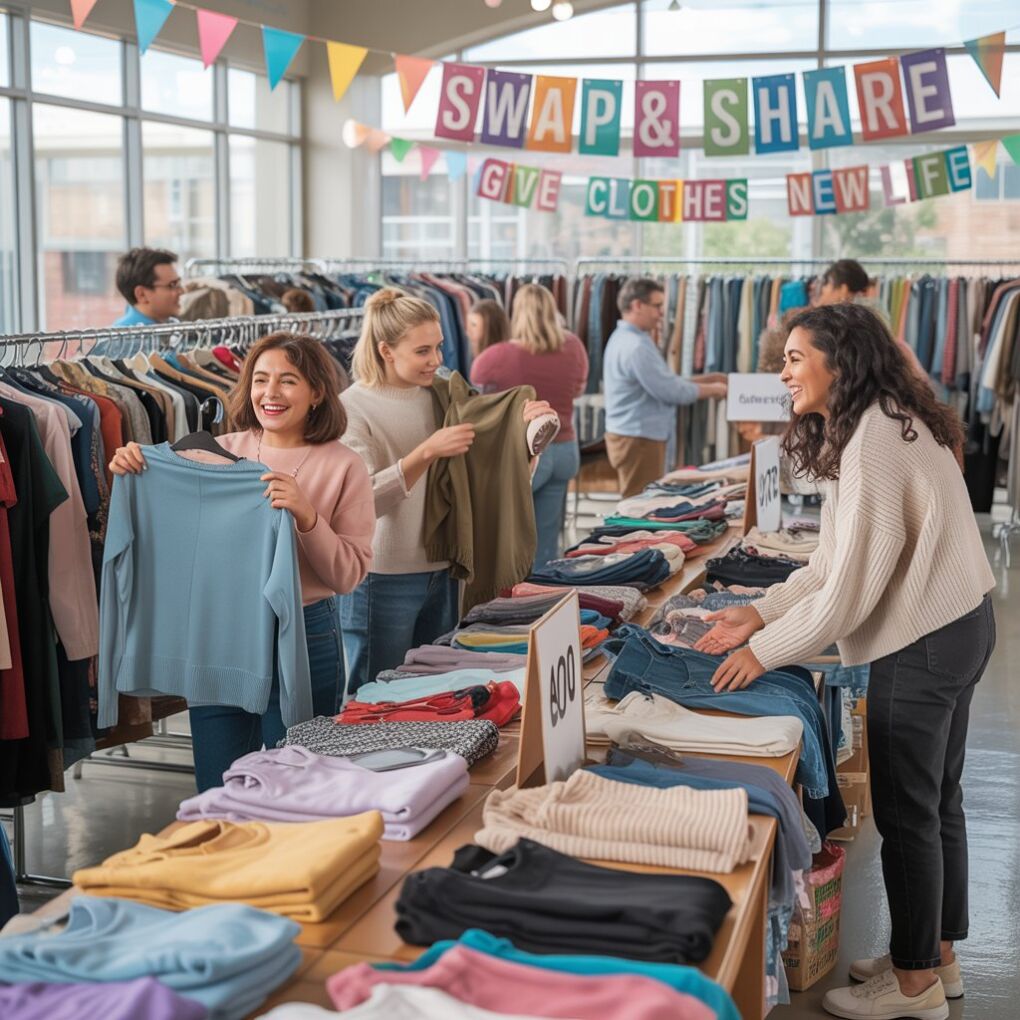
Arrival & Check-In (30 minutes) As guests arrive, have them drop off their items at a designated table. One person (or the host) does a quick quality check—this isn’t about being harsh, just ensuring the “no stains” rule holds. Sort items into stations by category: tops here, bottoms there, dresses over there, accessories on the coffee table.
The Browse Round (45 minutes) Let everyone browse freely before any claiming begins. This is the time to try things on, share opinions, and get excited about what’s available. Put on a great playlist. Open the wine. Let the secondhand fashion trends conversation flow naturally—someone will inevitably bring up a piece that inspires a whole styling discussion.
The Swap Round (30–45 minutes) Depending on your group size, you can either open it up free-for-all style, or do a structured round where each person picks one item at a time until everything’s claimed. The structured approach prevents a rush and ensures everyone gets a fair shot.
The Leftover Round Anything unclaimed after the main swap can go back into a free pile where guests grab extras, or get set aside for donation to a local shelter or textile recycling program.
Make It Epic: Themes, Games, and Styling Tips
A clothing swap is already a great time—but a themed clothing swap? That’s a memory.
Theme Ideas
“Boho Festival Vibes” – Guests bring flowy dresses, fringe details, wide-brim hats, and statement jewelry. Perfect for spring or early summer swaps ahead of festival season.
“Office Chic Refresh” – Focus on workwear: blazers, tailored trousers, silk blouses, loafers. Especially popular in urban areas where the return-to-office wardrobe has people reevaluating their professional look.
“Vintage Finds Only” – Curate for secondhand fashion enthusiasts. Encourage pieces with a story: the 90s denim jacket, the Y2K slip dress, the structured bag found at a flea market.
“Capsule Wardrobe Reset” – Guests bring anything that doesn’t fit their personal capsule and take home only items that do. This turns the event into a genuine wardrobe curation exercise.
Games That Actually Work
The Raffle – Any item tagged as a “vintage finds trading” piece or a designer item goes into a raffle rather than the general swap. Everyone gets a ticket for each high-value item they bring, and the draw happens mid-event for maximum drama.
The Style Challenge – Randomly pair up guests and give each pair 10 minutes to style each other using only items from the swap pile. The group votes on the best look; winner gets first pick from the leftover pile.
“Guess the Brand” – Hold up items without tags showing and see who can identify the brand. Good icebreaker for groups where not everyone knows each other well.
Eco-Friendly Extras
Set up a mix-and-match station with a full-length mirror where guests can try combinations they’d never think to put together on their own. Sometimes the magic of secondhand shopping is discovering that a blazer you’d normally dismiss is exactly what makes an outfit.
Make a plan for unsold items before the party ends. Research local organizations—domestic violence shelters, teen programs, Dress for Success chapters—that accept clothing donations in your area. Knowing the items have a second life (even beyond your friend group) rounds out the zero-waste styling experience beautifully.
Post-Swap Wrap-Up and Styling Hacks
You’ve made it home with an armful of new-to-you pieces. Now what?
Inventory your haul. Take everything out and lay it flat. What works together? What fills a genuine gap in your existing wardrobe? What felt exciting in the moment but doesn’t quite fit your everyday style? This honest audit helps you actually wear what you took home—rather than just transferring the clutter from someone else’s closet to yours.
Steam everything. Even freshly laundered pieces benefit from a quick steam before they go into your wardrobe. It removes any lingering stiffness from folding and makes everything feel truly new.
Track your wears. A simple note on your phone listing what you swapped in (and what you eventually stop reaching for) is gold data for your next swap. You’ll start to understand your wardrobe habits more clearly and become a better editor over time.
Go virtual between swaps. Apps like ThredUp’s Clean Out Kit or platforms built specifically for clothing swaps let you participate in eco-friendly clothing exchanges outside of IRL events. They’re solid thrifting alternatives for the months between your seasonal swaps.
Finally, plan your next one. Swaps work best as a seasonal ritual—build the habit now, and by this time next year, your wardrobe will feel more intentional, more sustainable, and more you than ever.
Conclusion
A clothing swap with friends is one of those rare ideas that’s genuinely good for your budget, good for the planet, and good for your social life all at once. It transforms the guilt of an overflowing closet into something joyful and communal—and it proves that the most sustainable wardrobe refresh isn’t a shopping trip. It’s already hanging in someone else’s closet.
So round up your squad, dig out those pieces you’ve been meaning to donate, and host the swap your neighborhood didn’t know it needed.
Tag your swap pics with #MySustainableSwap—what’s your next wardrobe refresh?