Why Your Next Sewing Project Starts at the Thrift Store
Did you know US thrift stores divert 2.5 billion pounds of textiles from landfills yearly? That’s enough fabric to wrap the Earth 1,200 times! Instead of letting these materials go to waste, savvy DIY fashion enthusiasts are transforming thrifted textiles into show-stopping wardrobe staples. Forget $25/yard designer fabrics – the real treasure lies in $3 Goodwill finds that beat fast fashion in sustainability and style.
As a fellow sewer who’s spent years hunting through Salvation Army bins and estate sale racks, I’ve learned that thrift fabrics aren’t just cheap alternatives – they’re superior for creative projects. Vintage cottons have softer drape than new bolts, and pre-loved denim already has that broken-in texture no wash can replicate. Plus, every thrifted yard you rescue shrinks your carbon footprint by 73% compared to new textiles (EPA 2025 data).
This guide reveals the Top 10 Thrift Fabrics for DIY Fashion that consistently deliver under $5/yard at US stores. Whether you’re stitching your first tote bag or upcycling vintage silk into a statement blouse, these materials prove eco-conscious sewing doesn’t mean compromising on quality. From California garage sales to Midwest Plato’s Closet racks, I’ll show you exactly where to find them and how to transform them into professional-looking pieces.
Pro Tip: Scan thrift store clothing racks sideways – you’ll spot texture variations (like corduroy ridges or silk sheen) faster than reading tags.
By the end, you’ll master turning “discarded” textiles into zero-waste fashion DIY triumphs that cost less than your morning latte. Ready to turn textile waste into wearable art? Let’s dive into why thrift fabrics should be your #1 sewing resource.
Why Thrift Fabrics Rock for DIY Fashion
Thrift fabrics deliver triple wins: planet-positive impact, wallet-friendly pricing, and one-of-a-kind character you’ll never find at Joann Fabrics. Let’s break it down:
💰 Cost Savings That Add Up
New quilting cotton averages $12/yard; thrifted? $1–3/yard (or free if you deconstruct garments!). A $5 Goodwill blouse yields 2+ yards of vintage silk – equivalent to $30+ new fabric. Over a year, thrifting could save you $200+ on materials alone.
♻️ Sustainability Beyond the Hype
Every thrifted yard prevents 2.1 lbs of CO₂ emissions versus new production. When you choose sustainable thrift fabric ideas, you’re directly supporting the circular economy – no greenwashing required.
🌈 Unbeatable Variety
Thrift stores are time capsules of textile history. You’ll find discontinued 1970s polyester prints, deadstock linen, and artisan-woven wools unavailable new. This diversity fuels truly unique DIY fashion projects.
Sourcing Secrets for US Thrifters
- Apps: Use OfferUp’s “free fabric” filter on Tuesday mornings (when stores restock donations)
- Seasonal Goldmines: Hit estate sales in April (spring cleaning) and October (pre-holiday decluttering)
- Pro Hack: Ask Salvation Army staff about “remnant bins” – often $2/lb for fabric scraps
Prep Like a Pro
Always:
- Pre-wash in cold water with ½ cup vinegar (removes odors/stains)
- Check for damage by holding fabric against window light – reveals thin spots
- Steam-press before cutting (vintage fabrics often have deep creases)
Embrace these thrifted fabric hacks, and you’ll build a stash that’s kinder to Earth and your budget. Now, let’s spotlight the top 10 game-changers!
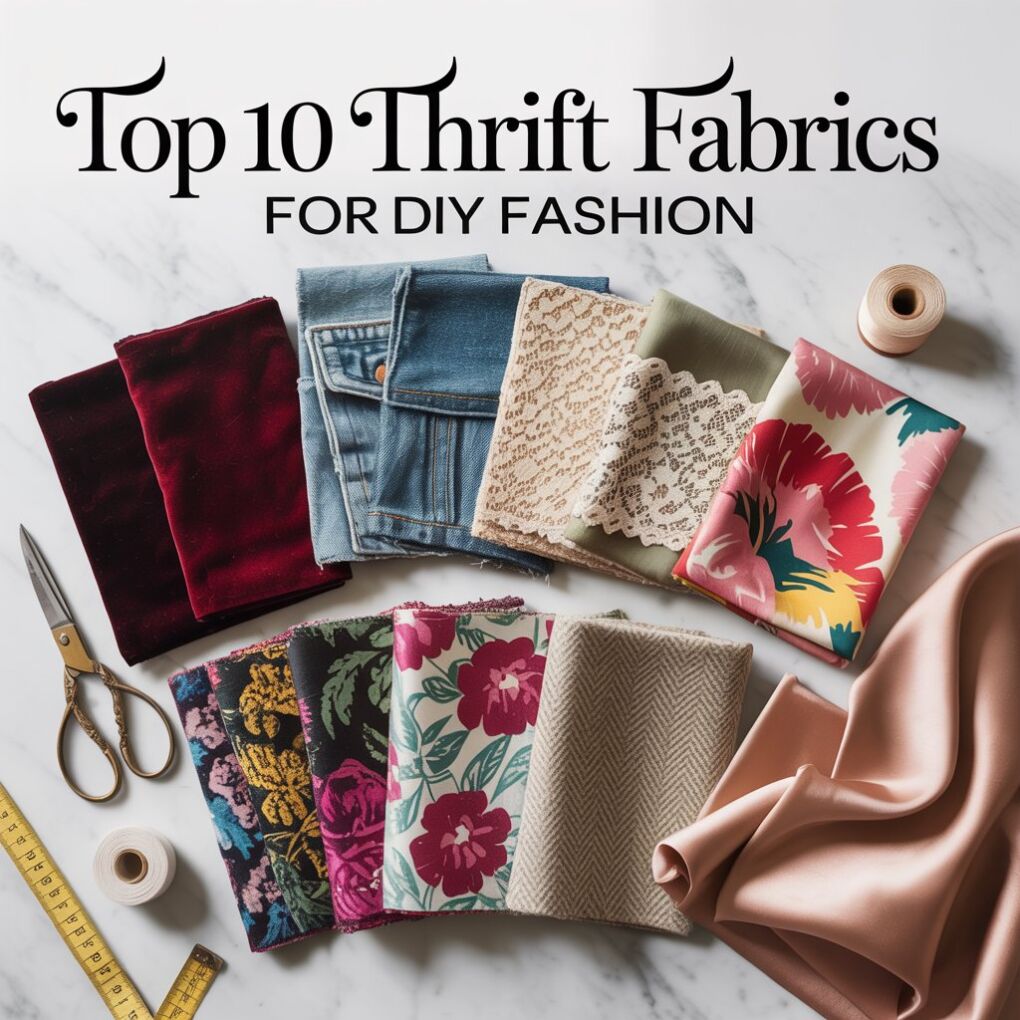
Top 10 Thrift Fabrics for DIY Fashion
1. Thrifted Cotton Fabrics
Description & Why It’s Top-Tier
Soft, breathable, and endlessly versatile, thrifted cotton (from old sheets, shirts, or quilts) dominates US thrift bins. Its pre-washed texture eliminates shrinkage worries – a best thrift store fabric for beginners.
Best DIY Projects
- Zero-waste tote bags: Cut pillowcases into rectangles (no pattern needed!). Fold, sew sides, and attach straps from old t-shirts.
- Patchwork skirts: Combine floral shirt fronts with solid dress backs using French seams.
- Reusable produce bags: Use lightweight quilting cotton with a simple drawstring casing.
Pro Tip: Save selvedges for sturdy bias tape!
Sourcing & Cost in US
Found in 90% of Goodwill clothing racks. Deconstruct men’s dress shirts ($1–$3) for 1.5+ yards. Estate sales often have vintage quilts ($5–$10).
Pro Tips & Hacks
Pre-wash in hot water to maximize softness. Pair with upcycled clothing fabrics like denim for contrast. Use 80/12 needles to prevent skipped stitches.
2. Vintage Denim
Description & Why It’s Top-Tier
Pre-2000s denim used 100% cotton with tighter weaves – far more durable than modern stretch denim. Perfect for sustainable denim upcycling with authentic fades.
Best DIY Projects
- Patchwork jeans: Replace worn knees with contrasting denim from thrifted jackets.
- Crossbody bags: Line with thrifted cotton prints; add magnetic snaps from old purses.
- Denim scrunchies: Cut 2″ strips from inseams (least faded areas).
Pro Tip: Use pinking shears on raw edges – fraying becomes a design feature!
Sourcing & Cost in US
Look for stiff, non-stretch jeans at Salvation Army ($2–$4). Avoid ripped styles (weak fabric). Plato’s Closet has premium vintage ($8–$12).
Pro Tips & Hacks
Soak in vinegar water to set color. Use denim thread (heavier weight) and size 16 needles. Save pocket bags for small projects!
3. Upcycled Wool Blends
Description & Why It’s Top-Tier
Thrifted wool coats (60–80% wool blends) offer warmth without itchiness. These eco-friendly textiles are ideal for cold-weather upcycling.
Best DIY Projects
- No-sew scarves: Cut coat lining into 6″x60″ strips; fringe ends.
- Skirt liners: Use under-layers from vintage coats to add warmth to thin skirts.
- Coasters: Layer felted wool scraps with fusible web.
Pro Tip: Felt fabrics by washing in hot water – creates seamless edges!
Sourcing & Cost in US
Target winter coat racks (Oct–Feb). Goodwill coats start at $3. Estate sales yield designer wool (Max Mara, $10–$15).
Pro Tips & Hacks
Always pre-wash to felt. Use a walking foot to prevent shifting. Pair with thrifted silk fabrics for luxurious linings.
4. Thrifted Silk & Satin
Description & Why It’s Top-Tier
Gently worn blouses and ties hide yards of lustrous vintage silk thrift finds. Silk’s natural sheen elevates simple projects instantly.
Best DIY Projects
- Blouse revamps: Add satin collars to plain shirts using bias binding.
- Lining upgrades: Replace polyester linings in thrifted jackets with silk.
- Hair accessories: Cut tie fabric into bows; secure with elastic from old underwear.
Pro Tip: Use tissue paper under silk when cutting to prevent slipping.
Sourcing & Cost in US
Check men’s tie racks ($1–$3 each = 3+ yards). Women’s blouses at Goodwill avg. $2.50. Avoid water-stained pieces.
Pro Tips & Hacks
Hand-wash only. Use silk pins (fine tips) and size 60/8 needles. Steam never iron to avoid shine marks.
5. Linen Remnants
Description & Why It’s Top-Tier
Vintage tablecloths and curtains provide crisp, breathable linen – a budget-friendly sewing material that softens with every wash.
Best DIY Projects
- Summer shirts: Modify thrifted linen curtains into oversized button-ups (cut along existing hems).
- Curtain-to-clothes: Turn napkins into crop tops using basting stitches for gathers.
- Reusable napkins: Hem thrifted tablecloth scraps.
Pro Tip: Embrace linen’s wrinkles – they add vintage charm!
Sourcing & Cost in US
Home goods sections at Salvation Army ($1–$4 for tablecloths). Estate sales have premium Irish linen ($5–$8).
Pro Tips & Hacks
Pre-wash to shrink. Use 90/14 needles. Pair with flannel fabrics for cozy-crisp layering.
6. Flannel & Plaid
Description & Why It’s Top-Tier
Men’s flannel shirts (100% cotton) offer durable, pre-shrunk fabric perfect for DIY fashion projects with cabin-core appeal.
Best DIY Projects
- Pajama pants: Use shirt fronts/back; add elastic waistband from old sweatpants.
- Quilted laptop sleeves: Layer flannel with thrifted fleece.
- Plaid headbands: Cut 2″ strips; sew into loops.
Pro Tip: Cut with the plaid pattern – align checks at seams for pro results.
Sourcing & Cost in US
Ubiquitous at Goodwill ($1–$2/shirt). Target November (hunting season) for premium flannels.
Pro Tips & Hacks
Pre-wash in cold water. Use French seams to prevent fraying. Save collar stands for bag handles!
7. Corduroy Cuts
Description & Why It’s Top-Tier
Vintage corduroy (wide-wale) has richer color depth than modern versions. Its texture adds instant dimension to upcycled clothing fabrics.
Best DIY Projects
- Vests: Deconstruct thrifted jackets; replace lining with cotton prints.
- Pants repairs: Patch knees with contrasting corduroy from old trousers.
- Tote bag accents: Add corduroy pockets to canvas bags.
Pro Tip: Always cut with the nap direction – light will highlight ridges uniformly.
Sourcing & Cost in US
Look for stiff, non-shiny pants at Salvation Army ($2–$5). Avoid thin, worn-out pieces.
Pro Tips & Hacks
Use a roller foot to prevent fabric “gathering.” Steam lightly from the back. Pair with linen remnants for texture contrast.
8. Vintage Polyester Prints
Description & Why It’s Top-Tier
1970s polyester holds bold geometric prints unavailable today. These sustainable thrift fabric ideas scream retro-cool without the landfill guilt.
Best DIY Projects
- 70s dresses: Modify shift dresses with high-low hems and flared sleeves.
- Pillow covers: Use dress fronts with invisible zippers.
- Hair scarves: Cut narrow strips; tie into bows.
Pro Tip: Polyester won’t fray – cut freely without finishing edges!
Sourcing & Cost in US
Women’s vintage sections at Plato’s Closet ($4–$8/dress). Estate sales yield designer prints ($10+).
Pro Tips & Hacks
Use polyester thread. Iron on low heat with pressing cloth. Pair with thrifted lace for boho layers.
9. Canvas & Duck Cloth
Description & Why It’s Top-Tier
Thrifted workwear (overalls, aprons) provides heavy-duty canvas – the ultimate budget-friendly sewing material for structured projects.
Best DIY Projects
- Market totes: Reinforce seams with double stitching; add cotton webbing straps.
- Apron revamps: Dye faded canvas with coffee for vintage look.
- Book covers: Line with thrifted cotton prints.
Pro Tip: Sand canvas edges with 120-grit paper for “distressed” look.
Sourcing & Cost in US
Workwear racks at Goodwill ($2–$4/pair). Estate sales have painter’s drop cloths ($3–$5).
Pro Tips & Hacks
Use denim needles (size 16). Pre-wash to soften. Pair with upcycled wool for bag insulation.
10. Lace & Trims
Description & Why It’s Top-Tier
Vintage curtains, table runners, and lingerie overflow with delicate lace – ideal for thrifted fabric hacks that add instant elegance.
Best DIY Projects
- Boho tops: Layer lace over thrifted cotton tanks.
- Collar upgrades: Replace plain shirt collars with lace edging.
- Coaster edging: Hem thrifted linen squares with lace trim.
Pro Tip: Cut lace between motifs to maximize usable sections.
Sourcing & Cost in US
Home goods sections ($1–$3 for runners). Check wedding dress racks at specialized thrift stores.
Pro Tips & Hacks
Hand-baste lace to base fabric. Use water-soluble stabilizer for embroidery. Pair with satin fabrics for bridal upcycles.
Thrift-to-Makeover Project Tutorial: Pillowcase to Blouse
Tools: Scissors, thread, sewing machine, thrifted cotton pillowcase ($1 at Goodwill)
Time: 45 minutes
- Deconstruct: Cut pillowcase open along seams; remove hem.
- Draft Pattern: Fold fabric in half. Cut curved neckline (4″ deep), tapered sleeves (12″ long), and A-line body (18″ wide at hem).
- Sew: Right sides together, stitch shoulders/sleeves. Turn right side out.
- Finish: Fold ½” hem at neckline/sleeves; topstitch. Add vintage buttons from thrifted shirts.
Pro Hack: Use the pillowcase flap as a pocket! This zero-waste fashion DIY costs $1.50 (including thread) – less than 1 coffee.
Conclusion
You’ve just unlocked 10 sustainable thrift fabric ideas that turn landfill-bound textiles into head-turning fashion – all under $5. From thrifted cotton tote bags to vintage silk blouses, these materials prove eco-sewing is more creative, not less. This weekend, hunt your local Goodwill with this list in hand. Spot that stiff denim jacket? Grab it! See a floral tablecloth? It’s your next skirt!
Your sewing machine is waiting. Go make magic!
FAQ: Thrift Fabric Essentials
Q: What are the best thrift fabrics for sewing beginners?
A: Start with thrifted cotton (pillowcases, shirts) – it’s stable and forgiving. Avoid slippery silks until you gain confidence.
Q: How do I sanitize thrifted fabrics safely?
A: Wash in cold water with ½ cup vinegar + detergent. For delicate items, freeze in a sealed bag for 48 hours to kill pests.
Q: Can I upcycle stretchy thrift store fabrics?
A: Yes! Use jersey knits for headbands or T-shirt yarn. But avoid them for structured projects – they lose shape.
Q: Where do I find free thrift fabrics?
A: Check Facebook Marketplace “free” section, church rummage sales, or thrift store remnant bins ($2/lb).
Q: How do I spot high-quality thrift fabrics?
A: Look for tight weaves (hold to light – fewer holes = better), natural fibers (cotton, wool, silk), and minimal fading. Avoid stiff or brittle textures.