Choosing your wedding dress should feel exciting — not overwhelming. Yet between scrolling through thousands of Pinterest pins, decoding bridal terminology, and navigating boutique appointments, it’s easy to feel lost before you’ve even tried on a single gown. You’re not alone. Most brides-to-be describe dress shopping as one of the most emotionally charged parts of wedding planning, and for good reason: this is the outfit you’ll remember for the rest of your life.
Here’s the good news. With a clear plan, a realistic wedding budget, and a basic understanding of what works for your body and venue, you can walk into any bridal boutique feeling confident and prepared. This guide breaks down exactly how to choose a wedding dress — from silhouettes and fabrics to fittings, alterations, and budgeting — so you can find a gown that fits your body, your venue, and your vision. Whether you’re dreaming of a dramatic ball gown wedding dress or a breezy beach wedding dress, we’ve got you covered.
Let’s get started.
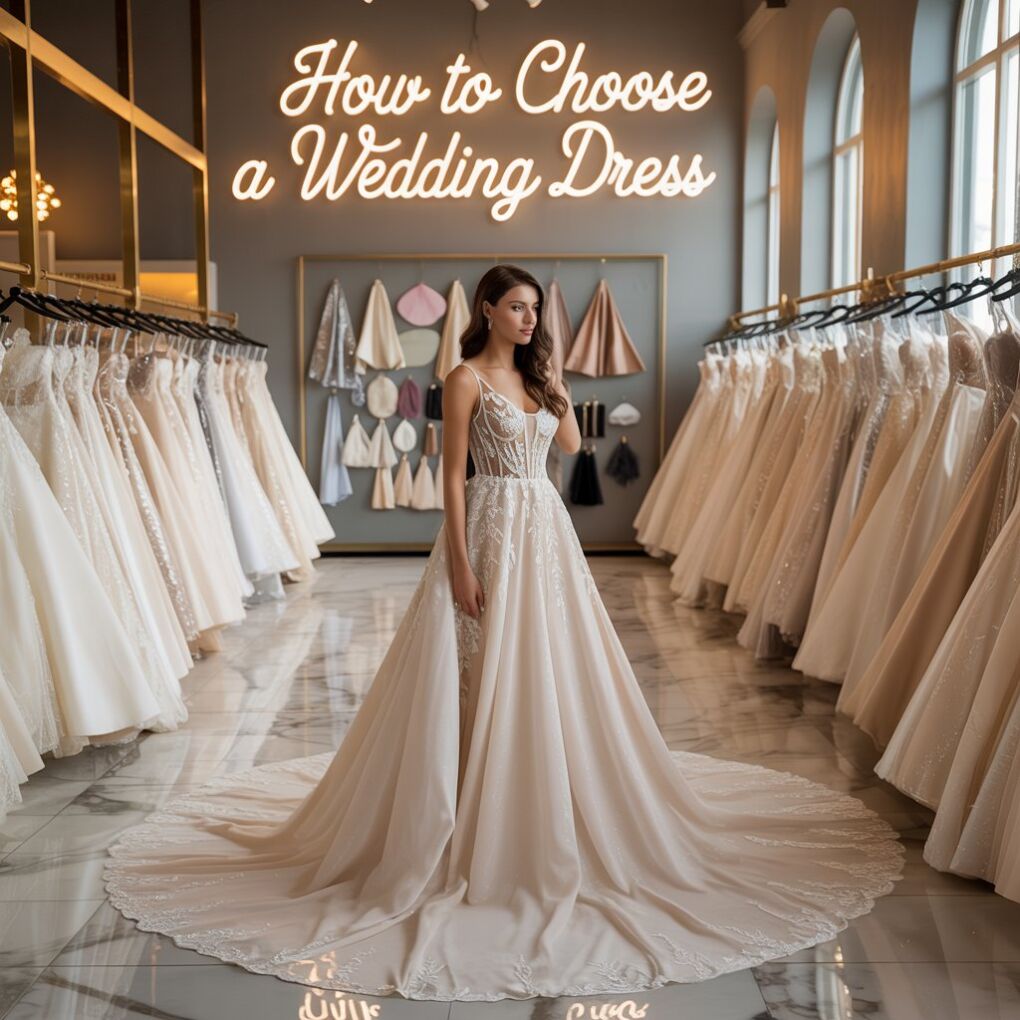
Your Pre-Shopping Checklist: What to Do Before You Visit a Bridal Shop
Before you book your first bridal appointment, take an hour to get organized. Brides who prep ahead consistently report a smoother, more enjoyable shopping experience.
✅ Pre-Shopping Checklist
- Set a realistic budget. Know your maximum spend including wedding dress alterations, accessories, and undergarments. Alterations alone can add $300–$800+ to your total.
- Define your wedding style and venue. A formal church wedding dress calls for different fabrics and coverage than a backyard garden ceremony. Your venue directly influences silhouette, train length, and fabric weight.
- Create a curated inspiration board. Limit your Pinterest board to 15–25 images. Too many pins create decision paralysis rather than clarity.
- Identify your preferred silhouettes — and your dealbreakers. Maybe you know you hate strapless necklines or love long sleeves. Note both.
- Book appointments in advance. Popular boutiques, especially during peak engagement season (January–April), fill up weeks ahead. Call or book online early.
- Limit your entourage. Bring 1–3 trusted people whose opinions you genuinely value. Larger groups create conflicting feedback and added pressure.
Pro tip: Take a photo of your venue or ceremony space on your phone. Showing it to your bridal consultant helps them steer you toward gowns that photograph beautifully in your specific setting.
Understanding Wedding Dress Silhouettes and How They Flatter Every Body
The wedding dress silhouette is the overall shape of the gown — and it’s the single most important decision you’ll make. Get the silhouette right, and details like lace, beading, and neckline become easy additions. Here’s a breakdown of the major wedding dress styles and who they flatter best.
A-Line Wedding Dress
What it looks like: Fitted through the bodice and waist, then gradually flaring out to the hem — like the letter “A.” This is the most universally flattering and popular silhouette in the U.S.
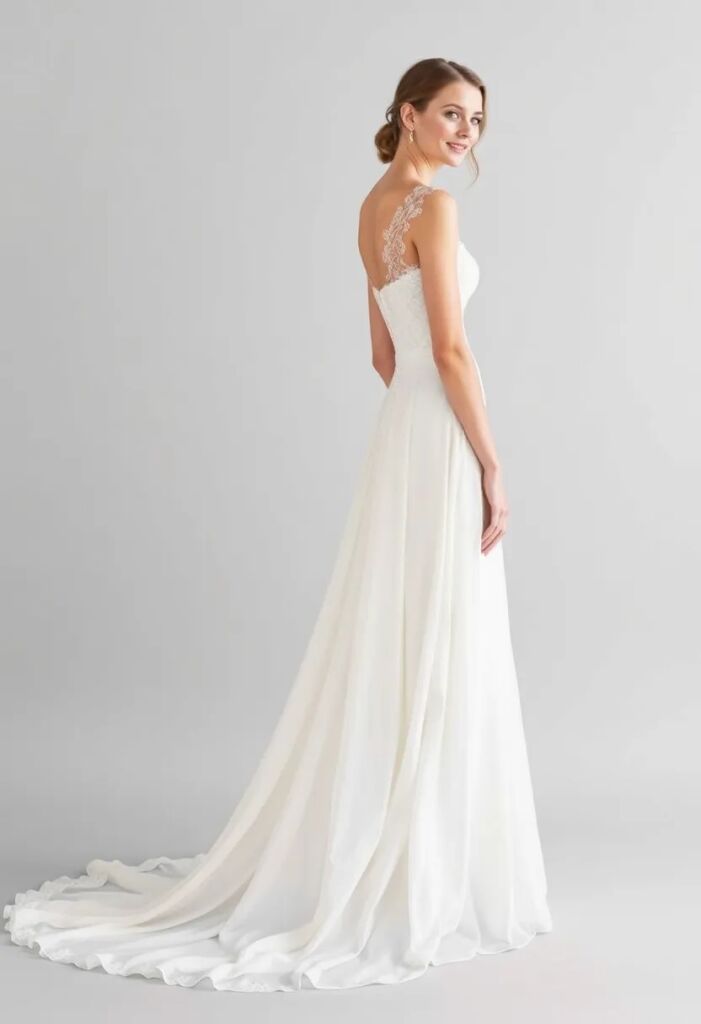
Best for: Nearly every body type — hourglass, pear, apple, rectangle, petite, and plus-size brides. The gentle flare skims over hips and thighs while defining the waist.
Style pointers:
- Pair with a sweetheart or V-neck wedding dress neckline to elongate the torso.
- Add a chapel-length veil for a classic, romantic look.
- Works beautifully in lace, satin, or tulle.
Real-world example: Sarah, a bride planning a vineyard wedding in Napa, chose an A-line chiffon gown with a sweetheart neckline. The silhouette gave her enough movement for an outdoor ceremony while maintaining the formality her venue called for. It photographed beautifully against the vine rows and was comfortable enough to dance in all night.*
Ball Gown Wedding Dress
What it looks like: Fitted bodice with a dramatically full, structured skirt that starts at the natural waist. Think fairy-tale princess.
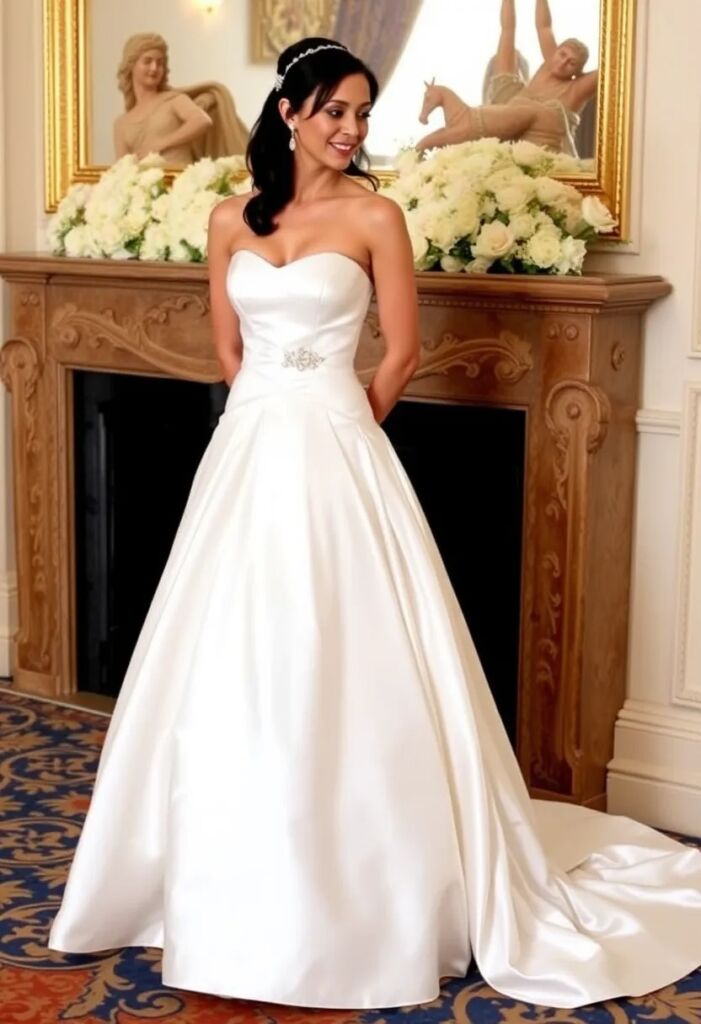
Best for: Pear-shaped and rectangle body types, brides who want a dramatic entrance, and formal or black-tie venues. Petite brides should be cautious — excessive volume can overwhelm a smaller frame, but a modified ball gown with a slightly less full skirt works well.
Style pointers:
- Opt for a strapless wedding dress or off-the-shoulder neckline to balance the full skirt.
- Mikado or satin fabrics hold the structured shape best.
- Consider veil and train options carefully — a cathedral train adds grandeur but requires bustling.
Sheath / Column Silhouette
What it looks like: A slim, straight silhouette that follows the body’s natural line from shoulders to hem with minimal flare.
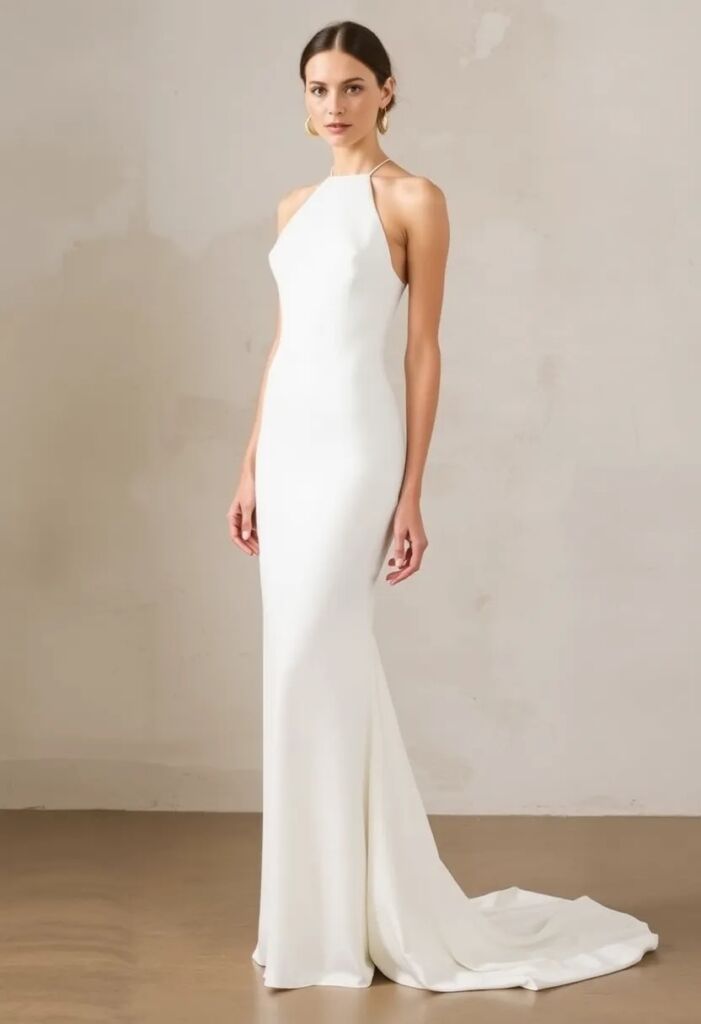
Best for: Hourglass and rectangle shapes, tall brides, and minimalist aesthetics. Ideal for modern, city loft, or courthouse weddings.
Style pointers:
- High necklines or halter styles look sleek and editorial.
- Crepe or satin fabrics drape beautifully on this silhouette.
- Great option for a destination wedding dress because it packs and travels easily.
Mermaid / Trumpet Wedding Dress
What it looks like: Fitted through the bodice, waist, and hips, then flaring out at or below the knee. The trumpet flares slightly higher (mid-thigh) than the mermaid (at the knee).
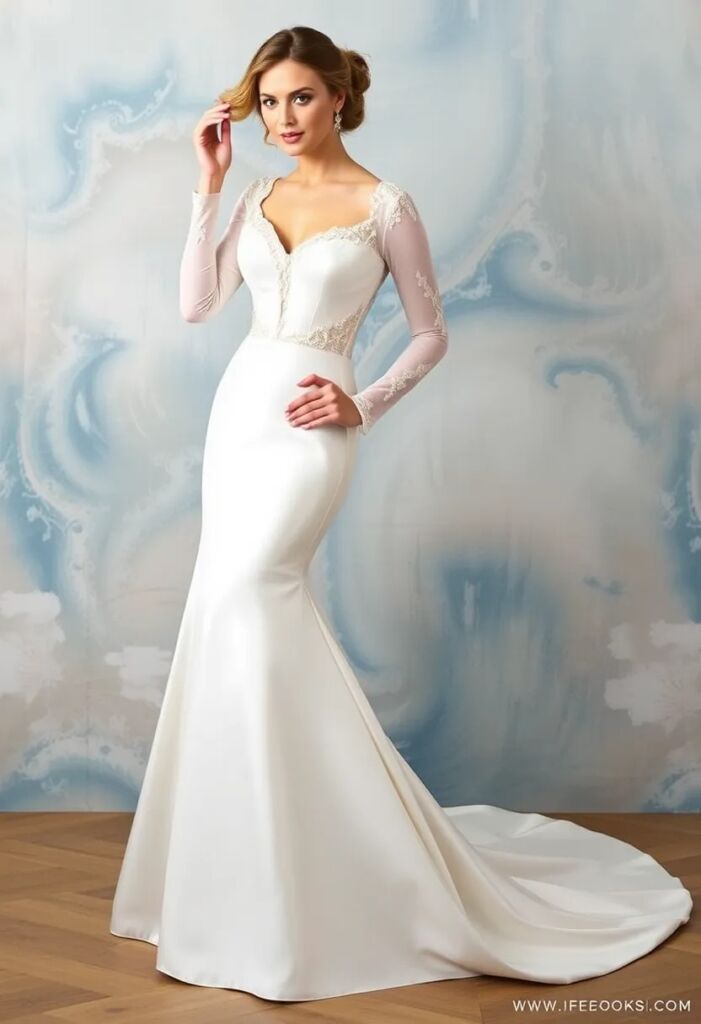
Best for: Hourglass figures and brides who want to show off their curves. Apple-shaped brides may find the tight fit through the midsection less comfortable.
Style pointers:
- Illusion backs and long sleeve details add drama.
- Works best in structured fabrics like satin, mikado, or stretch crepe.
- Practice sitting and walking before the big day — mobility is more limited.
Fit-and-Flare
What it looks like: Similar to a trumpet but with a softer, more gradual flare. Less restrictive than a mermaid.
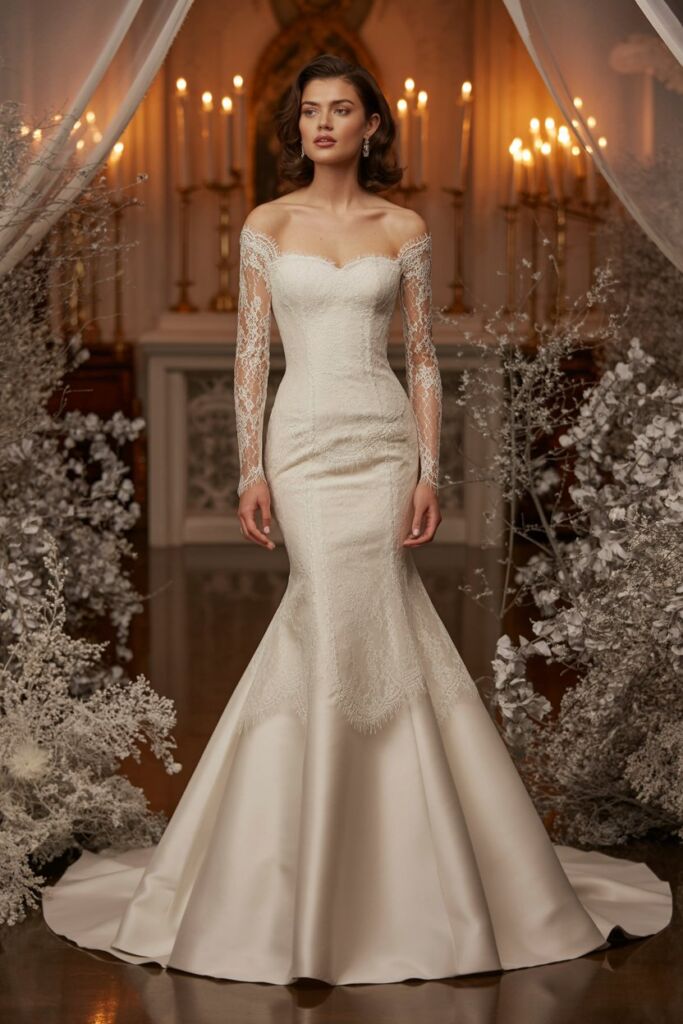
Best for: Hourglass and pear shapes. A great middle ground for brides who want curve-hugging style without the mobility limitations of a mermaid.
Style pointers:
- Pairs well with a long sleeve wedding dress design for vintage-inspired or winter weddings.
- Lace overlays add texture without bulk.
Tea-Length and Two-Piece Styles
What it looks like: Tea-length gowns hit mid-calf; two-piece styles separate the bodice and skirt for a modern, mix-and-match look.
Best for: Petite brides (tea-length elongates the leg visually), casual or retro-themed weddings, and second-time brides looking for something fresh. Plus size wedding dresses in tea-length are increasingly available and stunning.
Style pointers:
- Tea-length pairs perfectly with statement shoes — they’ll be visible!
- Two-piece sets allow you to change the top for the reception.
🚫 Top 3 Mistakes Brides Make When Choosing a Dress
- Ignoring the venue. A heavy satin ball gown at a July beach ceremony is a recipe for overheating. Always let your location guide your fabric and silhouette.
- Focusing on the size tag. Bridal sizing typically runs 1–2 sizes larger than streetwear. A bride who wears a size 8 in everyday clothes may be measured as a bridal 12. Don’t let the number upset you — focus on fit.
- Shopping without a budget ceiling. Falling in love with a $7,000 gown when your budget maxes out at $2,500 is a painful experience. Be upfront with your consultant about your range.
Choosing Fabric, Neckline, and Details
Once you’ve narrowed your silhouette, the wedding dress fabrics, neckline, and design details bring your vision to life.
Common Wedding Dress Fabrics
Fabric Quick Reference Guide (click to expand)
| Fabric | Characteristics | Best Season | Best For |
|---|---|---|---|
| Lace | Romantic, textured, intricate patterns | Year-round | Classic and vintage styles |
| Satin | Smooth, structured, high sheen | Fall/Winter | Ball gowns, formal weddings |
| Tulle | Light, airy, netted overlay | Spring/Summer | Fairy-tale and whimsical looks |
| Chiffon | Soft, flowing, lightweight | Spring/Summer | Beach and destination weddings |
| Organza | Crisp, sheer, slightly stiff | Spring/Summer | Layered skirts, structured overlays |
| Mikado | Heavy, structured silk blend | Fall/Winter | Architectural, modern silhouettes |
| Crepe | Matte, smooth, slight stretch | Year-round | Minimalist and sheath styles |
Seasonality matters more than you’d think. A beach wedding dress in heavy mikado will feel suffocating in 90-degree heat, while a chiffon gown might leave you shivering at a January church ceremony. If your wedding straddles seasons or involves an indoor-to-outdoor transition, consider a versatile fabric like crepe or a layered design with a removable overskirt.
Travel considerations: If you’re flying to a destination wedding, prioritize fabrics that resist wrinkling. Crepe and lace travel better than satin or taffeta, which require professional steaming upon arrival.
Necklines and Sleeves
Your wedding dress neckline dramatically shifts the overall look:
- V-neck and sweetheart: Elongate the neck and torso; universally flattering.
- High neckline / halter: Modern, sophisticated; ideal for tall brides and minimalist gowns.
- Strapless: Classic and popular, but requires proper structural support — make sure your bodice fits snugly during the fitting.
- Illusion neckline: Sheer fabric (often tulle or lace) creating the appearance of bare skin with coverage. A beautiful compromise.
- Long sleeves: From fitted lace to dramatic bishop sleeves, a long sleeve wedding dress adds elegance and works wonderfully for fall and winter ceremonies.
Budget, Timeline, and Where to Shop
Wedding Dress Budget: What to Expect
Here’s a realistic look at the wedding dress budget landscape in the U.S. market:
| Dress Type | Estimated Price Range |
|---|---|
| Off-the-rack / sample sale | $500 – $1,500 |
| Made-to-order (standard boutique) | $1,500 – $4,000 |
| Designer / luxury bridal | $4,000 – $10,000+ |
| Custom wedding dress | $3,000 – $15,000+ |
| Secondhand wedding dress | $200 – $2,500 |
| Rental wedding dress | $150 – $1,500 |
Remember to add $300–$800 for wedding dress alterations and $100–$400 for accessories (veil, shoes, undergarments, jewelry).
Wedding Dress Timeline: When to Start Shopping
The wedding dress timeline catches many brides by surprise:
- 8–12+ months before: Start shopping if you want a made-to-order or custom gown. Most designers need 4–6 months for production, plus 2–3 months for fittings and alterations.
- 6–8 months before: Ideal for trunk show wedding dresses and designer collections — trunk shows often offer 10–15% discounts.
- 4–6 months before: Feasible for off-the-rack, sample, or secondhand purchases with a simpler alteration timeline.
- Less than 3 months: Focus on ready-to-ship online retailers, sample sales, or rental options.
Where to Shop
- Bridal boutiques: Curated selections, personalized service, and access to designers. Book bridal appointments well in advance.
- Department stores: Broader price range, often more casual shopping experience.
- Trunk shows: Limited-time events where designers showcase full collections, often at a discount.
- Sample sales: Deeply discounted floor samples. Sizes are limited, and gowns are sold as-is.
- Online retailers: Budget-friendly, but returns can be difficult. Order swatches first and know your measurements.
- Consignment and rental shops: Sustainable, cost-effective. A rental wedding dress is a smart choice for brides who don’t want to store a gown afterward.
Fit, Fittings, and Alterations
Wedding dress fittings are where your gown transforms from beautiful to perfect. Here’s what to expect.
The Fitting Schedule
- First fitting (8–10 weeks before the wedding): The seamstress pins and marks all adjustments — hem, bustle, bodice, straps. This is where you communicate your vision and comfort needs.
- Second fitting (4–6 weeks before): Check that all alterations are tracking correctly. Practice bustling the train with whoever will help on the day.
- Final fitting (1–2 weeks before): Everything should be complete. Do a full movement test — sit, walk, dance, raise your arms. Take the dress home or confirm pickup logistics.
Critical Tips for Every Fitting
- Bring your exact wedding shoes (or shoes with the same heel height) to every fitting. Hem length depends on this.
- Wear the undergarments and shapewear you plan to wear on the day. A different bra changes the bodice fit entirely.
- Know what can and can’t be altered. Taking in a dress 1–2 sizes is standard. Letting out is much harder and depends on seam allowance. Changing a neckline or silhouette is possible but expensive.
- Size up if you’re between sizes. It’s always easier to take a dress in than let it out.
Alteration Costs
Typical U.S. alteration costs range from $300 for simple hemming and bustling to $1,000+ for complex restructuring. Get a written estimate at your first fitting and ask about the alteration timeline upfront.
When to Say No: Advice for Friends & Partners
If you’re helping someone shop, remember: it’s their dress, not yours. If they light up in a gown, don’t deflate their moment with unsolicited opinions. Save honest feedback for when they directly ask, “What do you think?” — and even then, lead with what they seem to feel, not what you’d choose for yourself.
Inclusivity and Representation: Every Bride Deserves a Beautiful Fit
The bridal industry has made meaningful progress in recent years, but not every boutique is equally equipped to serve every body. Here’s how to advocate for yourself.
For Plus-Size Brides
Plus size wedding dresses are more widely available than ever, but not every shop carries extended-size samples. Before booking, call and ask: “Do you carry sample sizes 18 and above on the floor?” If they don’t, keep looking — you deserve to try on a gown in your size, not imagine how a size 6 might look scaled up. Look for designers who specialize in inclusive sizing and consult with bridal shops experienced in plus-size fittings.
For Petite Brides
Petite wedding dresses require proportion-specific adjustments beyond simple hemming. Ask whether your boutique works with a seamstress experienced in petite alterations — scaling down a bodice, adjusting waist placement, and shortening sleeves without disrupting design details requires real skill.
For Tall Brides
Ask about additional length options when ordering. Many designers offer extra-length versions for an added fee, and it’s far preferable to having fabric awkwardly added later.
For Transgender and Non-Binary Brides
Seek out boutiques that explicitly welcome LGBTQ+ clients (many list this on their websites). Ask for a private appointment if you’d feel more comfortable, and know that a good consultant will focus on your vision, not assumptions about what you “should” wear.
Cultural and Faith-Based Considerations
If your ceremony involves specific modesty requirements, traditional garments, or cultural elements, bring those details to your consultant early. Many designers offer custom overlays, sleeves, and coverings to accommodate religious or cultural needs without compromising your style.
Final Decision Checklist & Day-Of Tips
✅ Before You Say “Yes” to the Dress
- [ ] Comfort test: Can you sit, breathe, and eat comfortably?
- [ ] Movement test: Walk, dance, and raise your arms overhead.
- [ ] Check the bust, waist, and hem for pulling, gaping, or dragging.
- [ ] Photograph test: Take photos from all angles in natural and artificial light.
- [ ] Timeline confirmed: You know your delivery date, fitting schedule, and pickup plan.
- [ ] Storage plan: You have a cool, dry, dark location to store the gown until the wedding.
🎒 Day-Of Emergency Kit
- What to pack (click to expand)
- Safety pins and fashion tape
- Stain remover pen or wipes
- Mini steamer (for last-minute touch-ups)
- Sewing kit with white and ivory thread
- Extra buttons or hook-and-eyes
- Breath mints and blotting papers
- Phone charger and portable battery
- Bottled water and a snack bar
- The name and number of your seamstress (just in case)
Assign a dress point person. Designate your maid of honor, a parent, or your planner as the person responsible for bustling your train, checking your hem before you walk down the aisle, and handling any wardrobe emergencies. Brief them before the wedding day so it’s not a surprise.
Your Dress, Your Rules
At the end of the day, the best wedding dress is the one that makes you feel like the most confident, joyful version of yourself. Trends fade, Pinterest boards get archived, but the way you felt walking down the aisle? That stays.
Ready to start shopping? Book your first bridal appointment this week and use the pre-shopping checklist above to walk in prepared. Have questions about wedding dress shopping, sizing, or budgeting? Drop a comment below — we read every one, and your question might help another bride-to-be. You’ve got this. 💍